
If there were just a set of rules...

If I were in charge of the world, I think I would have made right and wrong a lot clearer. I'd have written a list of rules so we could all know for sure whether we were doing the right thing.
God didn't do that. Not for everything, anyway.
Some things are clearly right and wrong. Murder, adultery and stealing aren't up for discussion, and neither are forgiveness and our need for salvation. Those sit firmly on the outside edges of every pendulum.
But look at how many of Jesus' teachings seem to pull in two directions:
- We're told to love our enemies (Matthew 5:44), yet Jesus told His disciples to shake the dust off their feet in towns that rejected them (Matthew 10:14).
- We're told to let our good works shine so others see them (Matthew 5:16), and in the very next chapter to do good in secret (Matthew 6:2-4).
- We're told not to worry about tomorrow (Matthew 6:25-34), yet the bridesmaids who weren't prepared were left outside (Matthew 25:1-13).
So how are we supposed to know wha...
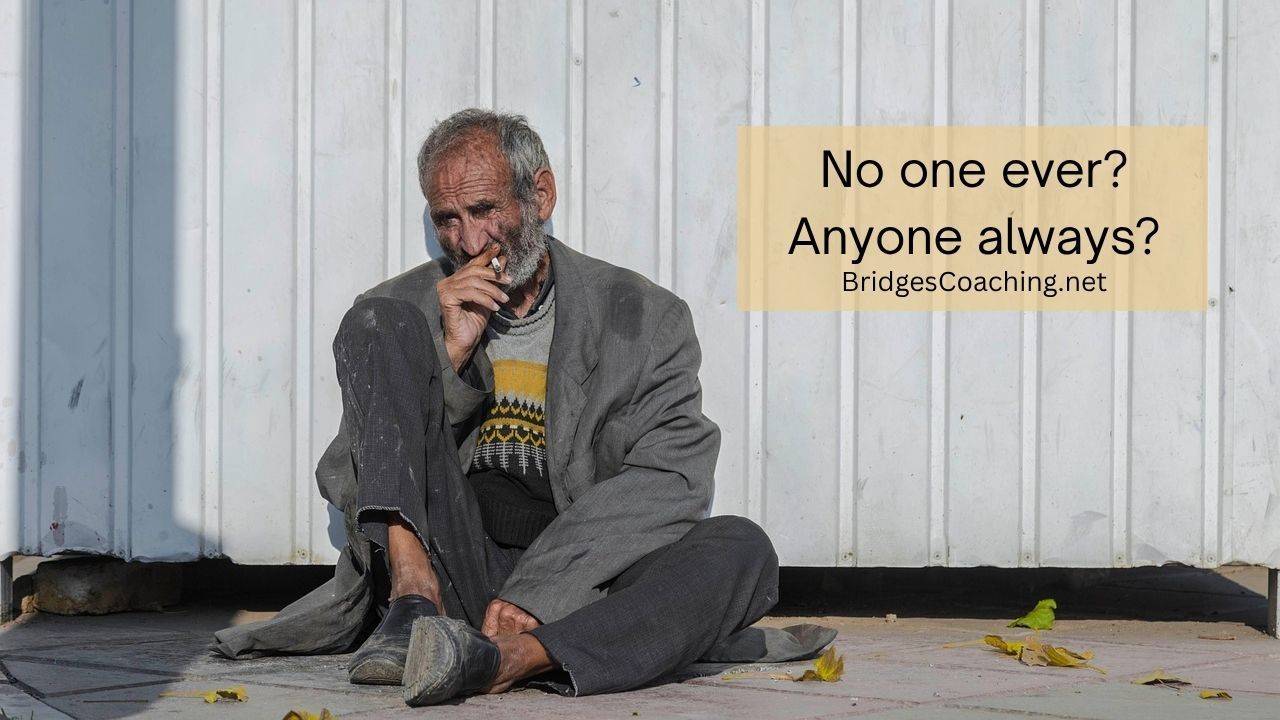
No one ever? Anyone always?
Last time I asked you to notice where you've been swinging. This week I'll go first.
When I walk by a homeless person, I tend to just keep walking.
Please don't write to tell me how cold that is until you've read the rest! I'm telling you my natural tendency, not my best moment. In my head it sounds reasonable. There are missions in every city offering a real way out. Handing over food or money feels like helping someone avoid the harder answer. I even have verses that support my thinking. Jesus said, "You will always have the poor with you." Paul wrote, "Anyone who refuses to work should not eat."
If I let those thoughts run to their extreme, they land here: give to no one, ever.
Now let me tell you about a guy from our church. I'll call him Keith. Keith has thought about setting up a tent city in his backyard for anyone who needs it. He regularly gives food to people in need, and he runs a food truck that is free, no questions asked.
Keith has verses too. The Good Samaritan. Joh...
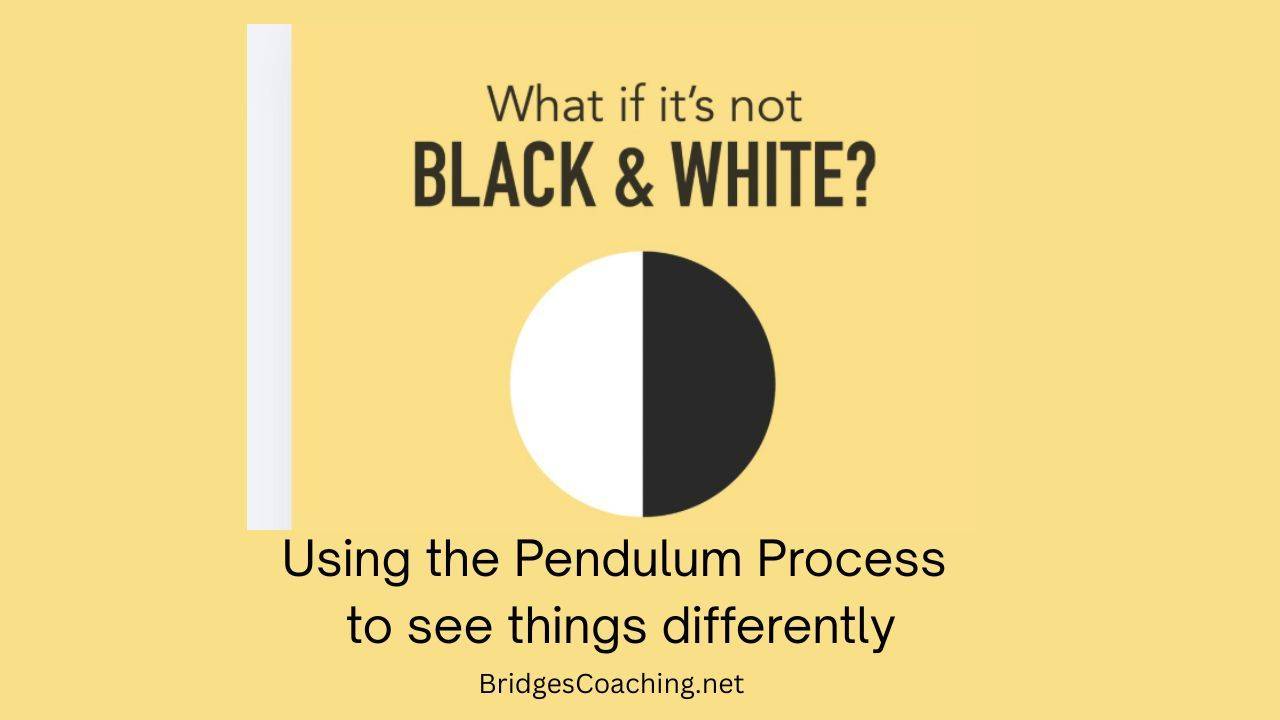
What If It's Not Black And White?
Most of us were handed a simple map for the life of faith: right or wrong, in or out, faithful or failing. It's a tidy way of thinking. It's also the reason so many of us feel stuck.
Here's what I've noticed after years of coaching. When we decide something is all bad, we swing hard toward its opposite. Raised with too many rules? We swing to none. Burned by being too trusting? We swing to trusting no one. Exhausted from saying yes to everything? We swing to a hard no.
It feels like growth. Often it's just the other side of the same pendulum.
And the pendulum doesn't stop there. It swings back. So we spend years moving between two extremes, convinced that one of them must be the right answer, and feeling like a failure every time we find ourselves on the wrong side again.
What if neither end is the answer?
Scripture is full of things we'd rather keep separate. Jesus is described as full of grace and truth, not one at the expense of the other. Ecclesiastes tells us there's a time t...
4 Ways Coach Training Has Changed My Life
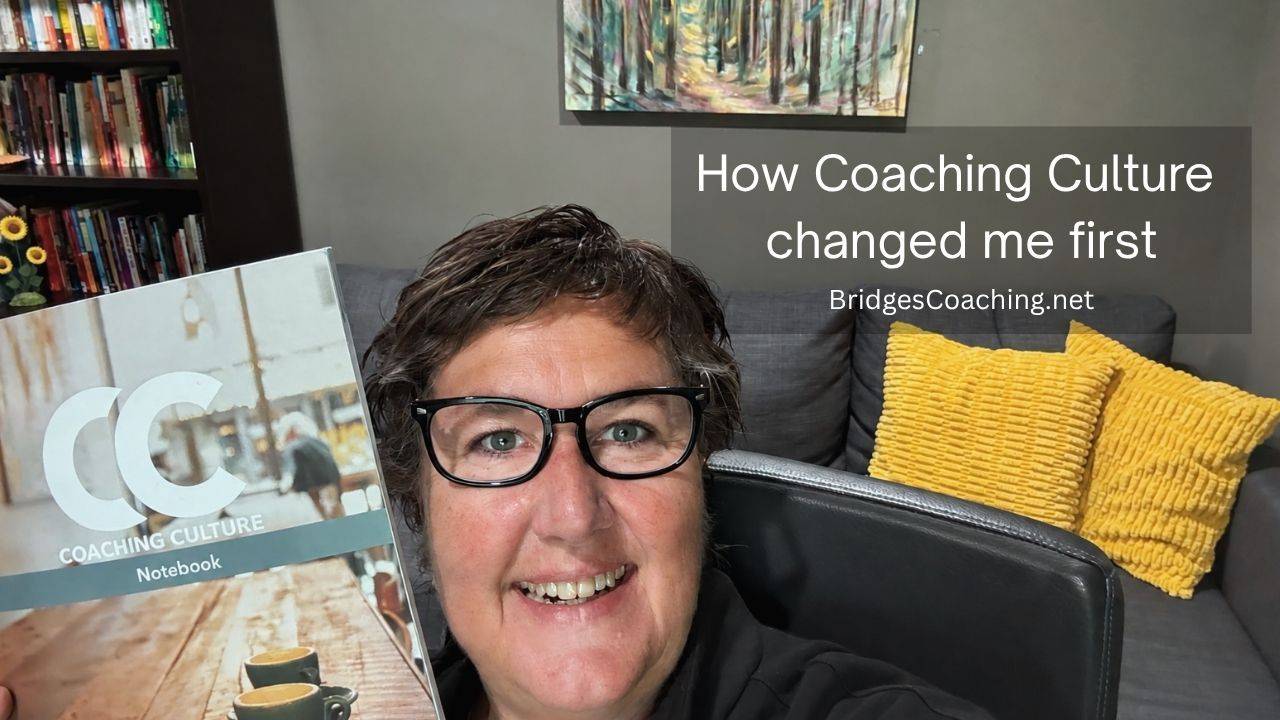
When I first learned about coaching nearly 20 years ago, I had no idea how much it would affect my personal life, my ministry, my family, and more.
Here are 4 ways understanding coaching culture has made a difference in my life — and why I think it could do the same for yours.
1. The weight of "figuring it out for people" has been lifted
I used to feel like I needed to come up with whatever someone needed the moment they brought me a problem. After all, they came to me for a reason. I felt responsible for a whole range of resolutions — finding provision for a need, weighing in with the "right" answer, sharing a timely nugget from my own study, providing emotional stability, and more.
Now, I help people learn to discern how God is already there for them, whatever they're facing. That shift alone has changed how I carry other people's burdens — and how much lighter I feel doing it.
2. Truly listening while someone processes is a selfless, needed gift
We all probably deal with a bit...
6 Facets Of Truly Caring Conversations

Most of us want to be caring in our conversations, but what does that really mean?
Some conversations are just catch-up conversations. Both people share whatever they like, maybe what they have been up to, their concerns, or plans they are making... they connect simply by visiting with each other.
Deeper conversations take a turn when one person chooses to focus on the other. This kind of conversation has 6 possible facets. (For the record, these are coaching conversations. They may not be formal coaching sessions, but they reflect a coaching culture.)
These types of conversations can be between friends and family members; they can be with co-workers or even acquaintances. They can happen intentionally by setting time aside, or on the fly as a connection is made in an airport, checkout line, or over a fence in a yard. Some of my favorites are with grandchildren, but they can also include conversations with aging parents or adult children.
Anytime intentional conversation is chosen...
"Relax Into God's Presence"

The phrase "Relax into God's presence" was coined by Steve Cuss, author of "Managing Leadership Anxiety" and so much more. (Curious, click here.)
His premise is that God always offers us peace if we can still ourselves to receive it.
This thought poses so many coaching questions.
- What keeps us from stilling ourselves to accept God’s peace?
- Are there lies we have come to believe that supersede His peace in our lives?
- Do different people have different thought patterns that keep them from relaxing into God's presence?
- Should good coaching lead us into a place of peace?
- Can quality action steps be accompanied by peace?
- Is it possible to have peace in seasons of transition, waiting, or healing?
- Are there times when peace is not what we should be experiencing?
Even a short word study on peace gives us a picture of what could be. We can have peace IN the midst of stuff, not just when everything is resolved. His peace is not what the world gives.
That is great news!
But it ...
Being Stuck Can Go Both Ways
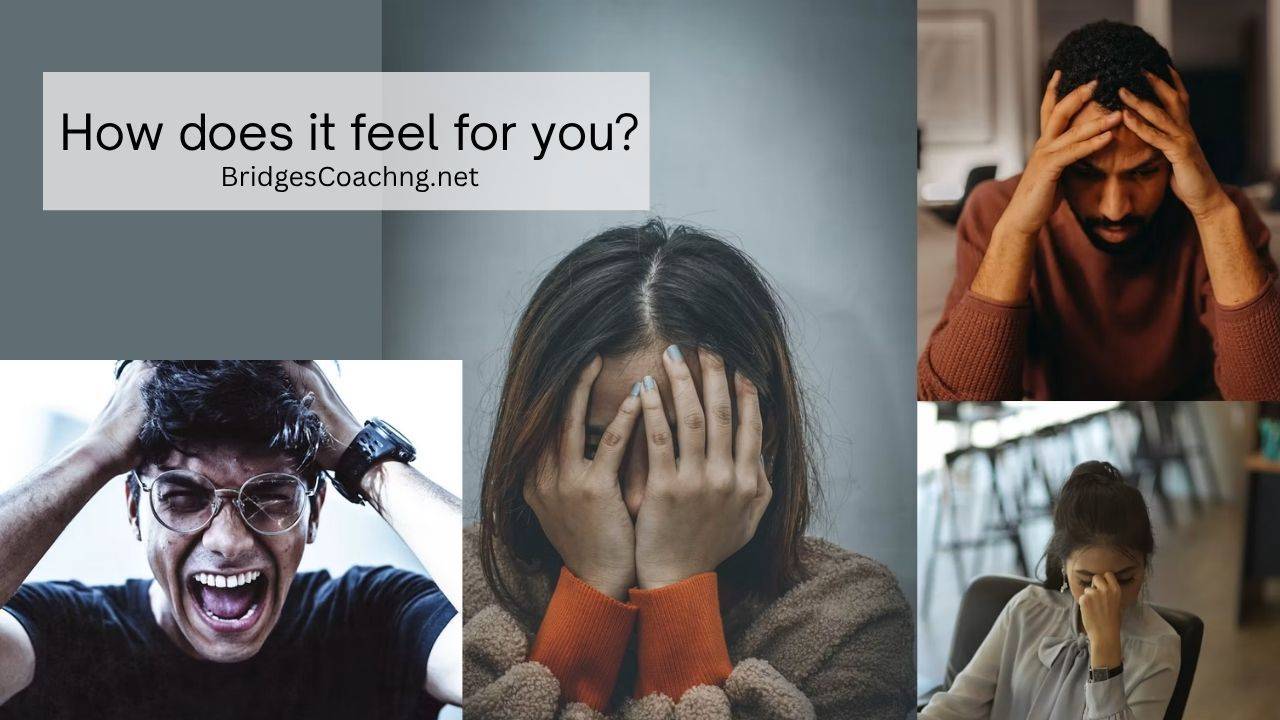
If you're an active believer, you have probably faced a situation or two that have been just plain hard.
It looks like this – someone shares something they are going through with you, and you listen and care. Maybe you give some advice, maybe you aren’t sure what to do, but you offer a caring heart. They feel seen. You feel like you were there for them.
Then it happens again. It feels a little like déjà vu.
Somehow you see them again, and they share again, and you listen again, but it’s the same stuff. Again, they feel better. They feel seen, and you feel like you were there for them.
When it happens three+ times, you start to wonder - am I really helping them, or are they just feeling better in the moment, with no actual change happening?
Maybe you start to avoid them.
Maybe you can’t understand what they really want from you.
Maybe you don’t know why they aren’t listening to advice.
Those are the typical responses to conversations that aren’t going anywhere: avoidance, conf...
Dealing With Doubts? Are You Like Me?
Are you an active believer who sometimes struggles with swirling thoughts? Sometimes, I am.
Sometimes I feel like I was really supposed to do something, but then the outcome wasn't what I hoped for.
I wonder if I missed it. And then I wonder if it was a test. Or maybe what happened was a stepping stone pointing me to something new I couldn't have seen without it. (See what I mean about the swirling thoughts?) How are you supposed to know?
I wish I could KNOW what to do every time and just do the right thing in the first place.
I feel that way about helping others too. I want to give them good advice to get the outcomes they are looking for. I want them to be sure about what they are doing every time and just do the next right thing.
If you are like me, these mental struggles then lead to questions like, "Why does it seem so hard to hear from God?" and "How can I help others if my own life has struggles?"
Understanding Coaching Culture shifted how I feel about my own journey AND...
Coach Training "lite" now available!

When I first took coach training years ago, I was changed and challenged by the concepts. I noted two things:
1) Coaching is an impactful way to actually help people grow. I saw how actively listening, asking empowering questions, and helping people move toward what God had for them worked WAY BETTER than feeling like I had to make things better for people.
2) Coaching is actually Biblical. God offers us all free will, and the best way to help someone toward their best next steps is to get out of the position of middleman, trying to tell them what they should do, and instead walk with them as they learn to discern.
I saw how the discipleship concepts that make up coaching culture could benefit so many believers as they interact with those around them.
I had taken several sessions of coach training to learn what I learned and was talking to God one day about how I wished there was a way to forward these concepts without people having to take multiple courses. I felt God challenge m...
How Does Discerning Work For You?

We all face stuff... Maybe it's a decision to be made, a goal to invest in, or perhaps you are facing a relational challenge.
Whatever it is. God wants to use it for good in your life.
He wants to connect with you in new ways. He wants to reveal Himself in some new way - maybe Counselor, or Friend, or Sustainer, or...
I kind of have a love/hate relationship with that familiar verse. You know the one - Romans 8:28, where God promises to use it all for good in our lives. If I'm honest, I sometimes have a different definition of "good". I don't want difficult stuff in my life, and even more so, I don't want my people to have it either.
I want all my people to be healthy, wealthy, and wise! :)
Turns out, though, we all learn and grow more through our difficulties than when things are easy. I'd rather learn from stories of others who were overcomers than have to face overcoming myself.
Guess that makes me human:)
It's complicated, though. On the one hand, we want things to go smo...